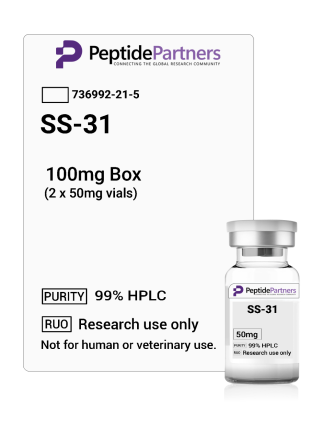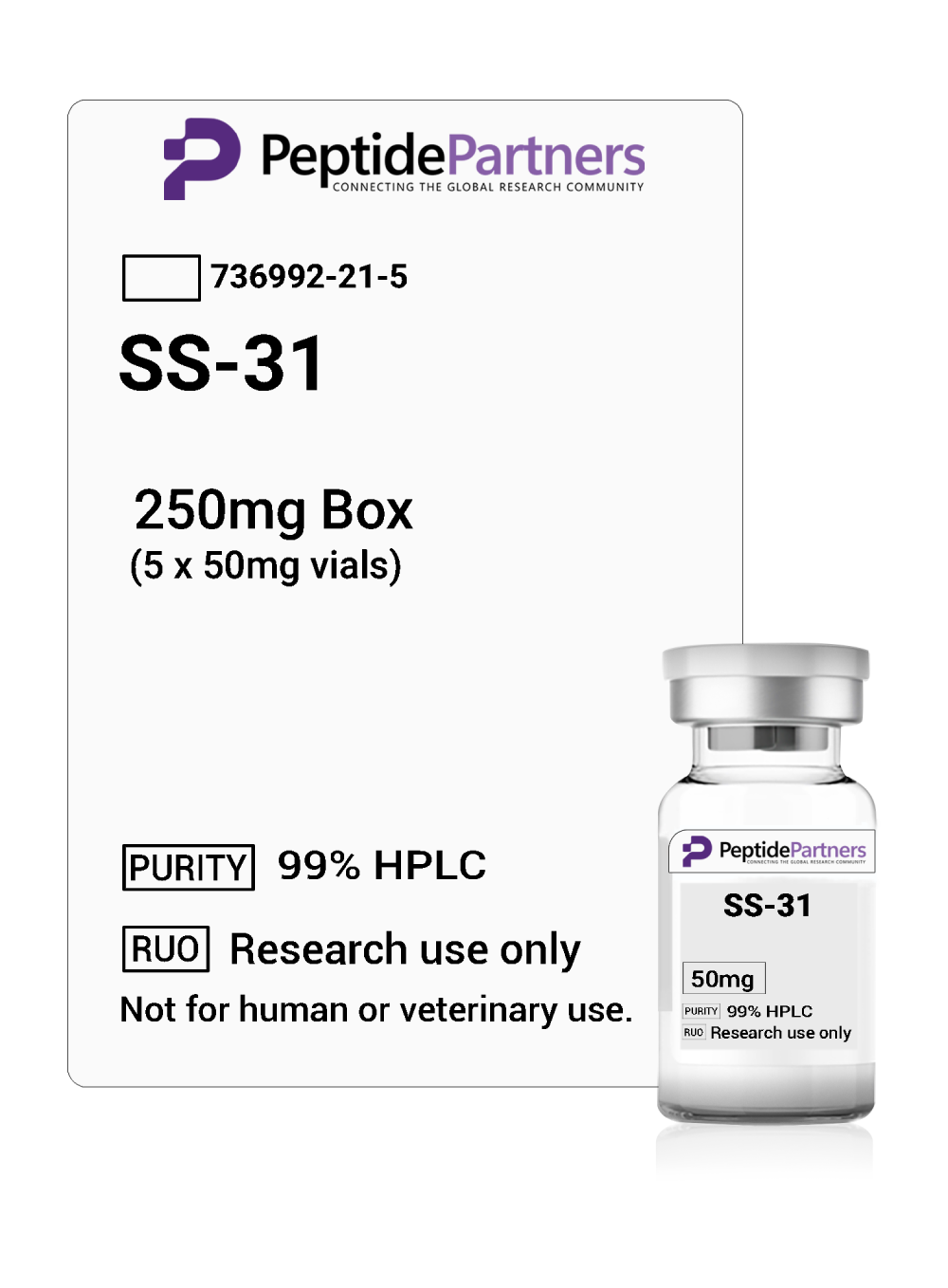
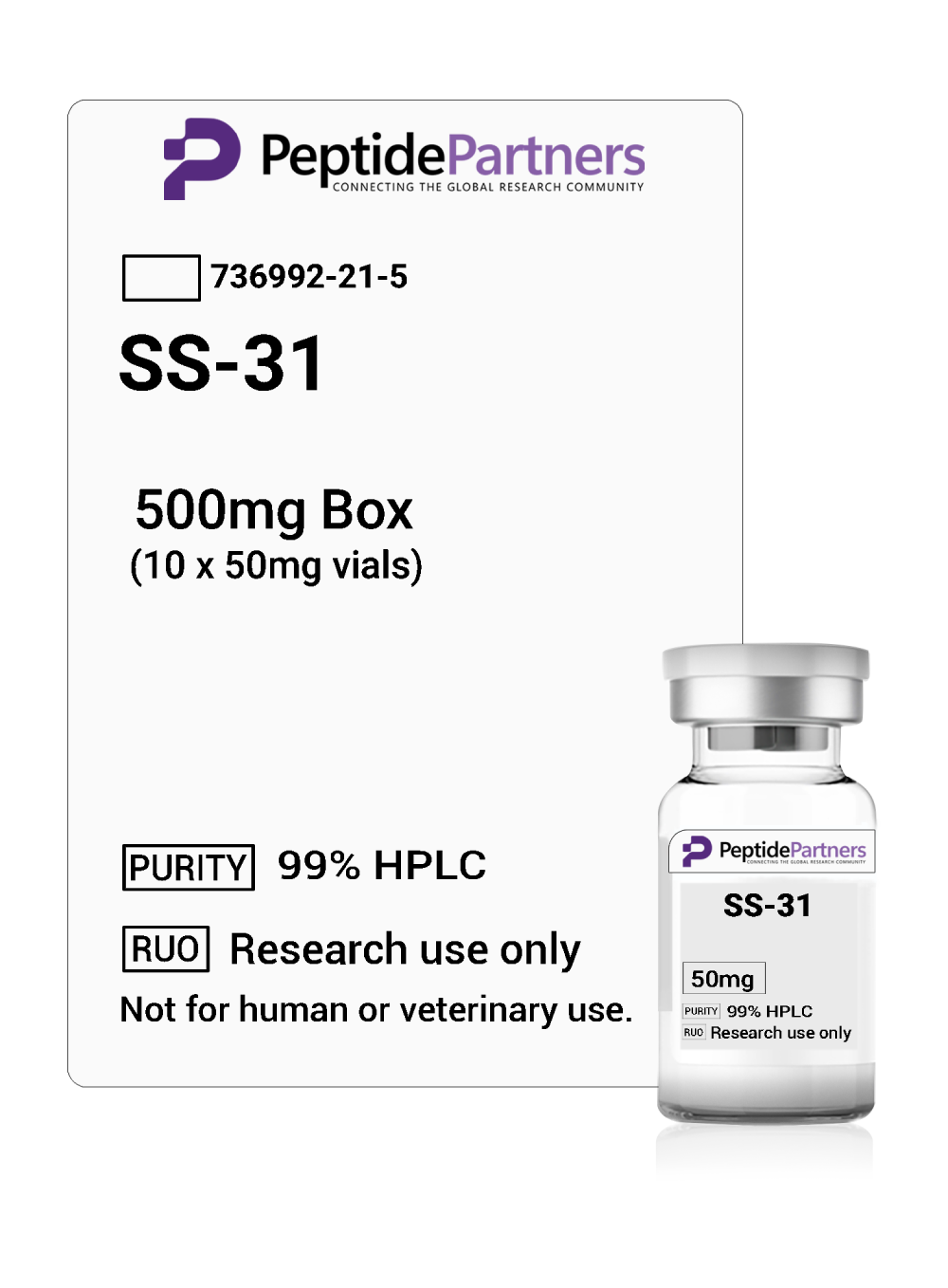
SS-31 (50mg vials)

Price range: $280.00 through $950.00

SS-31 – 50mg Vials Save over 60%! Swipe right to view full table → Product Format 50mg vials Vial Size 50mg Vial Capacity 3 mL Box Combinations 100mg, 250mg, 500mg Multi-vial Purity 99.66% Endotoxin Screening PASSED Heavy Metals Screening PASSED Sterility Screening PENDING Independently Tested YES Research Studies (for educational purposes only) Study 1: SS-31 protect retinal pigment epithelial cells from H2O2-induced cell injury by reducing apoptosis Authors: Jie Bai, Yumei Yang, Dingting Wu, Fan Yang Source: https://onlinelibrary.wiley.com/doi/abs/10.1111/1440-1681.13484Scientific Findings This in vitro study investigated the protective effects of SS-31 against hydrogen peroxide (H2O2)-induced oxidative stress in human retinal pigment epithelial…

SKU: PTP-SS-31-50MG-VIALS
Category:

Description

SS-31 – 50mg Vials

Save over 60%!

Swipe right to view full table →

Product Format 50mg vials
Vial Size 50mg
Vial Capacity 3 mL
Box Combinations 100mg, 250mg, 500mg
Multi-vial Purity 99.66%
Endotoxin Screening PASSED
Heavy Metals Screening PASSED
Sterility Screening PENDING
Independently Tested YES

Research Studies

(for educational purposes only)

Study 1: SS-31 protect retinal pigment epithelial cells from H2O2-induced cell injury by reducing apoptosis

Authors: Jie Bai, Yumei Yang, Dingting Wu, Fan Yang

Source: https://onlinelibrary.wiley.com/doi/abs/10.1111/1440-1681.13484

Scientific Findings

This in vitro study investigated the protective effects of SS-31 against hydrogen peroxide (H2O2)-induced oxidative stress in human retinal pigment epithelial (RPE) cells (ARPE-19 cell line). The results demonstrated that SS-31 pretreatment attenuated the loss of cell viability and reduced both oxidative damage and apoptosis in H2O2-treated RPE cells. Mechanistically, SS-31 was found to significantly upregulate the expression of the antioxidant enzymes Heme Oxygenase-1 (HO-1), Thioredoxin-1 (Trx-1), and the transcription factor Nrf-2. Furthermore, SS-31 inhibited apoptosis by downregulating the pro-apoptotic protein Bax and upregulating the anti-apoptotic protein Bcl-2. These findings suggest that SS-31 exerts its protective effects by enhancing the endogenous antioxidant defense system and inhibiting the apoptotic pathway in RPE cells.

Plain English Interpretation

This lab study looked at how the peptide SS-31 could protect eye cells from damage. The researchers used a chemical (hydrogen peroxide) to create stress in human retinal cells, similar to the kind of damage that can lead to retinal degeneration. They found that when the cells were treated with SS-31 beforehand, they were better able to survive and had less damage. SS-31 worked by boosting the cells’ own natural defense systems against damage and by preventing the cells from self-destructing. This suggests that SS-31 could be a potential treatment to protect the retina from diseases that involve this type of cell damage.

Study 2: SS-31 inhibits the inflammatory response by increasing ATG5 and promoting autophagy in lipopolysaccharide-stimulated HepG2 cells

Authors: Yunan Mo, Songyun Deng, Yuhang Ai, Wenchao Li

Source: https://www.sciencedirect.com/science/article/pii/S0006291X24004236

Scientific Findings

This in vitro study investigated the effects of the peptide SS-31 on lipopolysaccharide (LPS)-induced inflammation in HepG2 human liver cells. The researchers found that SS-31 treatment increased the levels of autophagy-related protein 5 (ATG5), which in turn promoted autophagic flux in the cells. This enhanced autophagy was shown to be the mechanism by which SS-31 exerted its anti-inflammatory effects. Specifically, SS-31 was observed to increase the formation of autophagosomes and autolysosomes, and the anti-inflammatory action was diminished when ATG5 was knocked down. The study concludes that SS-31 protects HepG2 cells from LPS-induced inflammation by upregulating ATG5-dependent autophagy.

Plain English Interpretation

This research explored how the peptide SS-31 can protect liver cells from inflammation. In the lab, scientists used a substance called LPS to create an inflammatory response in human liver cells. They discovered that SS-31 helps the cells to clean out waste and damaged parts through a process called autophagy, which is like a cellular recycling system. SS-31 boosts this cleaning process by increasing a key protein called ATG5. By enhancing this natural cleaning mechanism, SS-31 was able to reduce the inflammation in the liver cells, suggesting it could be a promising agent for treating liver inflammation.

Study 3: Mitochondrial protein interaction landscape of SS-31

Authors: Juan D. Chavez, Xiaoting Tang, Matthew D. Campbell, Gustavo Reyes, Philip A. Kramer, Rudy Stuppard, Andrew Keller, Huiliang Zhang, Peter S. Rabinovitch, David J. Marcinek, and James E. Bruce

Source: https://www.pnas.org/doi/10.1073/pnas.2002250117

Scientific Findings

This study utilized a chemical cross-linking with mass spectrometry approach to identify the mitochondrial protein interactors of the synthetic tetrapeptide SS-31 (elamipretide). The research provides direct evidence for specific interactions between SS-31 and a number of mitochondrial proteins, all of which are known to bind to cardiolipin. The identified protein interactors are functionally categorized into two main groups: those involved in ATP production via the oxidative phosphorylation pathway, and those participating in 2-oxoglutarate metabolic processes. The cross-linked residues revealed binding regions on these proteins that are often in close proximity to cardiolipin-protein interaction sites. These findings present a protein interaction landscape for SS-31, offering mechanistic insights into its therapeutic effects on mitochondrial function.

Plain English Interpretation

Scientists investigated how the drug SS-31, which is known to improve the function of mitochondria (the energy factories of our cells), actually works. While it was known that SS-31 interacts with a fat molecule called cardiolipin in the mitochondria, the specific proteins it targets were a mystery. Using a sophisticated laboratory technique, the researchers were able to identify the specific proteins that SS-31 binds to. They discovered that SS-31 interacts with key proteins involved in energy production and other vital cellular processes. This research helps to explain the mechanism behind SS-31’s beneficial effects and provides a clearer picture of how it can be used to treat diseases related to mitochondrial dysfunction.

Research Use Only. Not for use in diagnostic tests.

This product is solely intended for research purposes as a chemical compound. Its designation permits its use exclusively for in-vitro testing and laboratory experimentation. All information regarding this product provided on our website is purely educational. By law, any form of bodily introduction of this product into humans or animals is strictly prohibited. It should only be handled by professionals who are licensed and qualified. This product is neither a drug, food, nor cosmetic, and must not be misrepresented, misused, or mislabeled as such.

Additional information

QUANTITY (MG)

100 mg, 250 mg, 500 mg

Reviews

There are no reviews yet.

Be the first to review “SS-31 (50mg vials)”

Your email address will not be published. Required fields are marked *

Related products