
If you are planning a study that involves the TB-500 peptide, you will quickly find that the name is used loosely online. This guide explains what TB-500 is, how it relates to the naturally occurring protein thymosin beta-4 (Tβ4), what preclinical research has examined, and how laboratories typically store, reconstitute and verify the compound before use in experiments.

What Is the TB-500 Peptide?
Thymosin beta-4 is a small, 43-amino-acid protein (roughly 4.9 kDa) found in most mammalian cells, with especially high concentrations in platelets and white blood cells. It was first isolated from thymus tissue, which is where the "thymosin" name comes from, although it is not limited to the thymus.
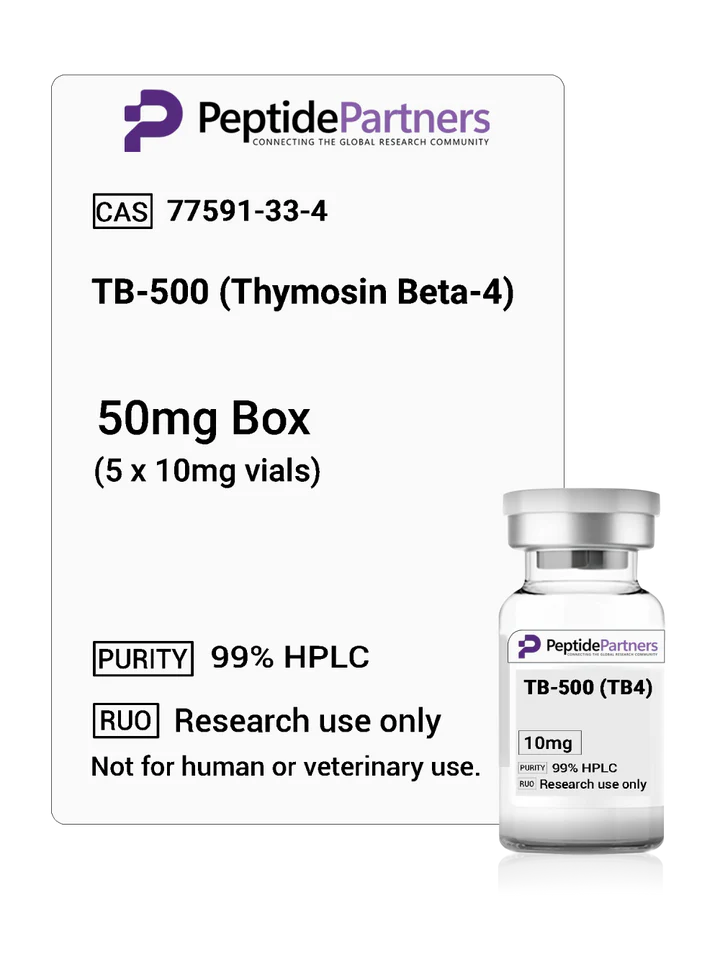
"TB-500" is the common commercial name for a synthetic research peptide modeled on thymosin beta-4. Depending on the supplier, the term may describe the full-length synthetic Tβ4 sequence or a shorter fragment built around its active actin-binding region. That ambiguity is a good reason to check the sequence, molecular weight and certificate of analysis (COA) for any lot you order. Our TB-500 (TB4) 10mg research vials are listed with the TB4 designation so researchers can match the material to their protocol.
How Thymosin Beta-4 Works: Actin Binding and Cell Migration
The best-characterized function of thymosin beta-4 is its role as a G-actin sequestering protein. Actin is the building block of the cytoskeleton, and cells constantly assemble and disassemble actin filaments as they move, divide and change shape. By binding free (monomeric) actin, Tβ4 helps regulate the pool of actin available for filament assembly.
A short central sequence of the protein, often written as LKKTETQ, is associated with this actin-binding activity. Because cell migration depends heavily on actin dynamics, researchers have used Tβ4 and related peptides to study how cells such as keratinocytes, endothelial cells and fibroblasts move into damaged tissue in experimental models. Research suggests Tβ4 may also influence signaling pathways involved in angiogenesis (new blood vessel formation) and inflammatory responses.
What Preclinical Research on TB-500 Has Examined
Most published work involves thymosin beta-4 itself rather than products sold under the TB-500 name, so findings should not be assumed to transfer automatically. Areas that have appeared in the peer-reviewed literature include:
- Dermal wound models: rodent studies have examined Tβ4's effects on re-epithelialization, collagen deposition and angiogenesis in experimental skin wounds.
- Cardiac research: a widely cited 2004 study in Nature reported that Tβ4 promoted cardiomyocyte migration and survival in a mouse model of cardiac injury, linked to activation of integrin-linked kinase (ILK).
- Corneal and ocular models: Tβ4 has been studied in corneal epithelial wound models, and ophthalmic formulations of Tβ4 have been evaluated in early-phase clinical trials.
- Inflammation signaling: in vitro and animal work has explored Tβ4's relationship with inflammatory cytokine signaling.
TB-500 vs BPC-157 in the Research Literature

TB-500 is frequently mentioned alongside BPC-157, but the two compounds are structurally and mechanistically unrelated:
- Origin: Tβ4 is an endogenous 43-residue protein; BPC-157 is a synthetic 15-amino-acid peptide derived from a sequence found in gastric juice protein.
- Proposed mechanism: Tβ4 research centers on actin regulation and cell migration; BPC-157 research has focused on pathways such as nitric oxide signaling and growth factor expression in animal models.
- Research models: Tβ4 literature leans toward dermal, cardiac and ocular models, while BPC-157 literature is heavily weighted toward gastrointestinal, tendon and ligament models in rodents.
Lab Storage and Reconstitution of Lyophilized TB-500
TB-500 is supplied as a lyophilized (freeze-dried) powder, which is considerably more stable than a peptide in solution. General laboratory handling practices for lyophilized peptides include:
- Before reconstitution: store vials sealed, protected from light, in a freezer (around -20°C) for long-term storage or refrigerated for shorter periods.
- Equilibrate first: let the vial reach room temperature before opening to limit moisture condensation on the powder.
- Choose an appropriate diluent: many labs use sterile water or bacteriostatic water, which contains 0.9% benzyl alcohol to inhibit microbial growth in multi-use vials. Our Reconstitution Solution (BAC water) is available in 10mL vials.
- Add diluent gently: run it down the inside wall of the vial and swirl rather than shake, since vigorous agitation can damage peptides.
- After reconstitution: keep solutions refrigerated (2–8°C), label them with date and concentration, and avoid repeated freeze-thaw cycles; aliquoting is a common approach.
TB-500 Purity, COAs and Third-Party Testing
Peptide purity directly affects the reliability of experimental results. Truncated sequences, synthesis by-products or incorrect mass can all confound data. When evaluating a TB-500 supplier, look for:
- HPLC purity data for the specific lot, not a generic sample report
- Mass spectrometry confirming the expected molecular weight
- Testing performed by an independent laboratory rather than only in-house
- Clear labeling of vial contents (for example, 10mg per vial)
TB-500 Peptide FAQ
Is TB-500 the same as thymosin beta-4?
Not always. Thymosin beta-4 is the naturally occurring 43-amino-acid protein. TB-500 is a commercial name for a synthetic research peptide based on Tβ4, which may be the full sequence or a fragment depending on the supplier. Check the COA and listed sequence for the lot you purchase.
What does TB4 mean on a product label?
TB4 is shorthand for thymosin beta-4. A label such as "TB-500 (TB4)" indicates the product is a thymosin beta-4 research peptide.
How long is lyophilized TB-500 stable?
Lyophilized peptides are generally stable for extended periods when kept sealed, dry, cold and away from light. Once reconstituted, stability is much shorter, so solutions are typically refrigerated and used within the timeframe specified by the lab's own protocols.
Why do researchers compare TB-500 with BPC-157?
Both are frequently studied in tissue-repair models, but they have different structures and proposed mechanisms, which makes side-by-side comparison useful for researchers designing preclinical studies.
Order Third-Party Tested TB-500 for Your Lab
Whether your work focuses on actin dynamics, cell migration or comparative peptide studies, starting with verified, well-documented material is essential. Peptide Partners supplies TB-500 (TB4) in 10mg lyophilized vials backed by independent testing. If your lab also works with growth hormone secretagogues, see our Sermorelin vs Tesamorelin research comparison guide.
Shop TB-500 (TB4) 10mg VialsAll products are sold strictly for laboratory research use only. They are not intended for human or animal consumption, or for diagnostic or therapeutic use. Nothing in this article is medical advice.